SikaBiresin® TD150
Epoxy casting resin with high transparency suitable for deep pouring
SikaBiresin® TD150 is an epoxy casting resin with high transparency suitable for deep pouring designed for artistic and decorative applications.
- High transparency
- Single pour casting up to 45 mm at 20 °C
- Low viscosity
- Self-degassing behaviour
- Good UV resistance

Overview
PRODUCT BENEFITS
- High transparency
- Single pour casting up to 45 mm at 20 °C
- Low viscosity
- Self-degassing behaviour
- Good UV resistance
Areas of Application
SikaBiresin® TD150 is used in applications such as furniture, art, and decoration to create deep-pour, transparent castings that are UV-resistant, which is very suitable for river tables, embedded objects, mock-ups, and trophies.This product is suitable for experienced professional users only. Tests under actual processing conditions and with additional materials such as coatings and release agents must be performed to proof material compatibility.
Packaging
SikaBiresin® TD150 (A)
| Canister | 5 kg |
| Drum | 220 kg |
| IBC | 1000 kg |
SikaBiresin® TD150 (B)
| Canister | 2.25 kg |
| Drum | 200 kg |
| IBC | 950 kg 1000 kg |
Product Details
| Properties |
| ||||
| Chemical base |
| ||||
| Color |
mixed |
| |||
| Mixing ratio | by weight by volume | 100 : 45 100 : 50 | |||
| Density |
| ||||
| Viscosity (CQP029-4) |
mixed |
| |||
| Pot life (CQP021-4) | depending on thickness at > 23 °C depending on thickness at < 23 °C | 5 hours 15 hours | |||
| Casting thickness | 25 ─ 80 mm | ||||
| Shore D hardness (CQP023-1 / ISO 868) | 80 A | ||||
| Flexural modulus (CQP027-2 / ISO 178) | 2100 MPa A | ||||
| Elongation at maximum strength (CQP036-2 / ISO 527) | 4.5 % A | ||||
| Glass transition temperature TMA (CQP053-1 / ISO 11359) | 39 °C A 47 °C B | ||||
| Shelf life | 12 months |
| CQP = Corporate Quality Procedure | A) curing condition: 23 °C for 7 days | B) post curing: 16 hours at 50 °C |
Application
METHOD OF APPLICATION
Increasing casting layer thickness requires a correspondingly lower ambient temperature. The maximum allowable layer thickness is a function of the ambient temperature. The table below indicates the required temperature for a certain layer thickness measured with a 350 mm x 300 mm plate.
| Room temperature | Thickness |
| 17 °C | 80 mm |
| 20 °C | 45 mm |
| 23 °C with fan | 70 mm |
| 23 °C | 35 mm |
| 26 °C | 30 mm |
| 29 °C | 25 mm |
Table 1: Casting thickness as function of temperature
Surface preparation
For products with long pot life and low viscosity the casting frame must be perfectly tight.
In case of simple and flat surfaces, a tape could be used as casting frame. Apply the tape around the border with the desired offset and make sure it is tight. The resin usually does not adhere to the tape.
A liquid or pasty wax could be used to prevent adhesion on models and supports.
Wood or other porous surfaces of models must be sealed before casting process. Quick setting epoxy or a varnish could be used but these sealers must be cured prior to the casting process.
Application
An adequate ambient temperature is the most important parameter to successfully cast SikaBiresin® TD150. There is a link between ambient temperature, volume and layer thickness. Excessive thickness or higher ambient temperature may induce high exothermic reaction leading to yellowing, cracks or uneven surface once cured. If increased casting thicknesses are required, it is recommended to ensure a low ambient temperature and to cast the material immediately after mixing and degassing.
The following diagrams illustrate the exothermic temperature development over time at different room temperatures for SikaBiresin® TD150.
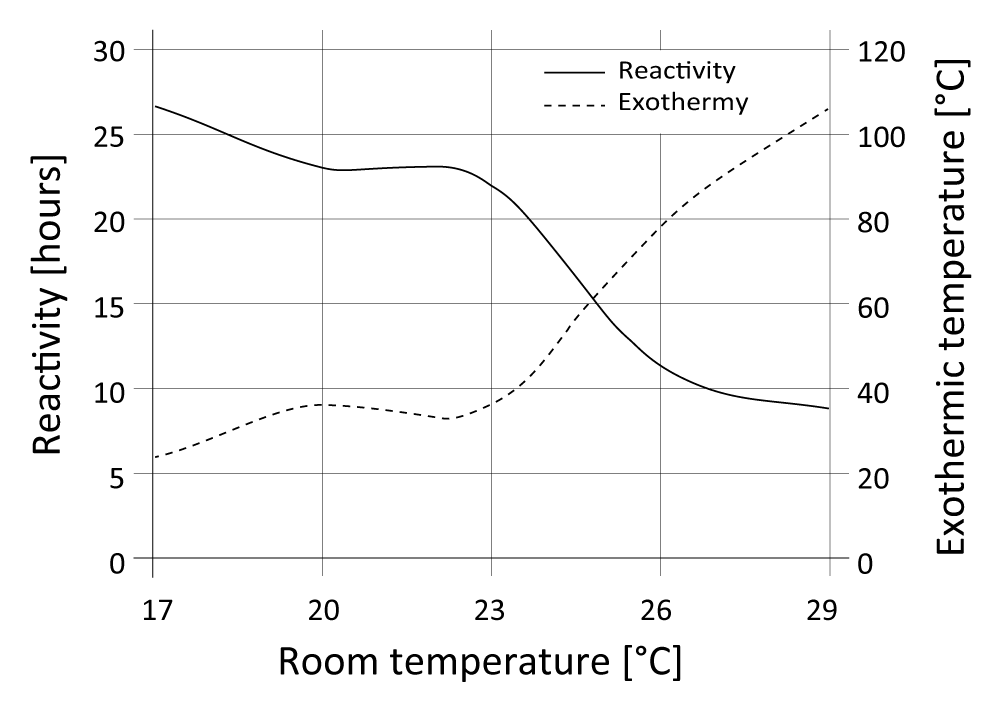
Diagram 1: casted in plactic cup – 630 g, Ø 85 mm, height 90 mm
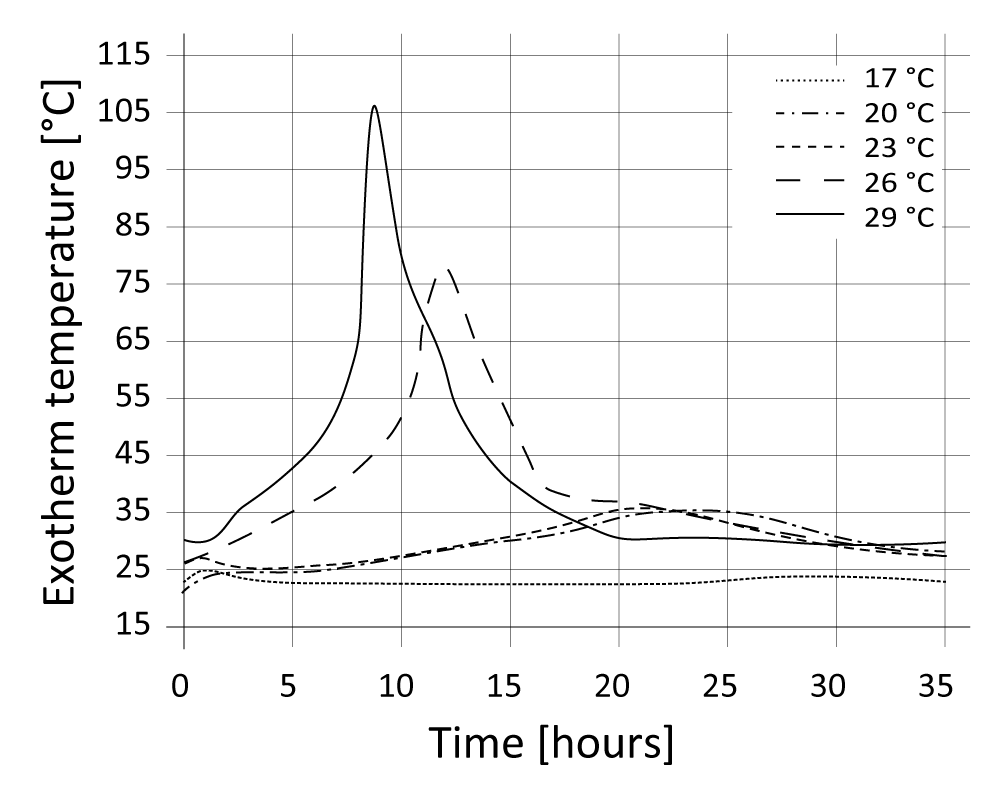
Diagram 2: casted in plactic cup – 630 g, Ø 85 mm, height 90 mm
Above 4 kg volume and a casting height of more than 40 mm it is recommended to decrease the exothermic temperature by using a fan or reducing the room temperature.
After casting and some relaxation time the bubbles close to the surface can easily be removed with a hot airstream. Use a hot air gun and sweep the surface at 15 – 20 cm distance avoiding to treat single spots (always sweeping).
To get on flat surfaces best transparent and shiny results, a sanding and polishing process may be necessary. Water sandpaper is recommended. Use appropriate tools to avoid heat on the SikaBiresin® TD150 while polishing.
STORAGE CONDITIONS
Both components must be stored at temperature between 15 °C and 25 °C in original unopened containers.